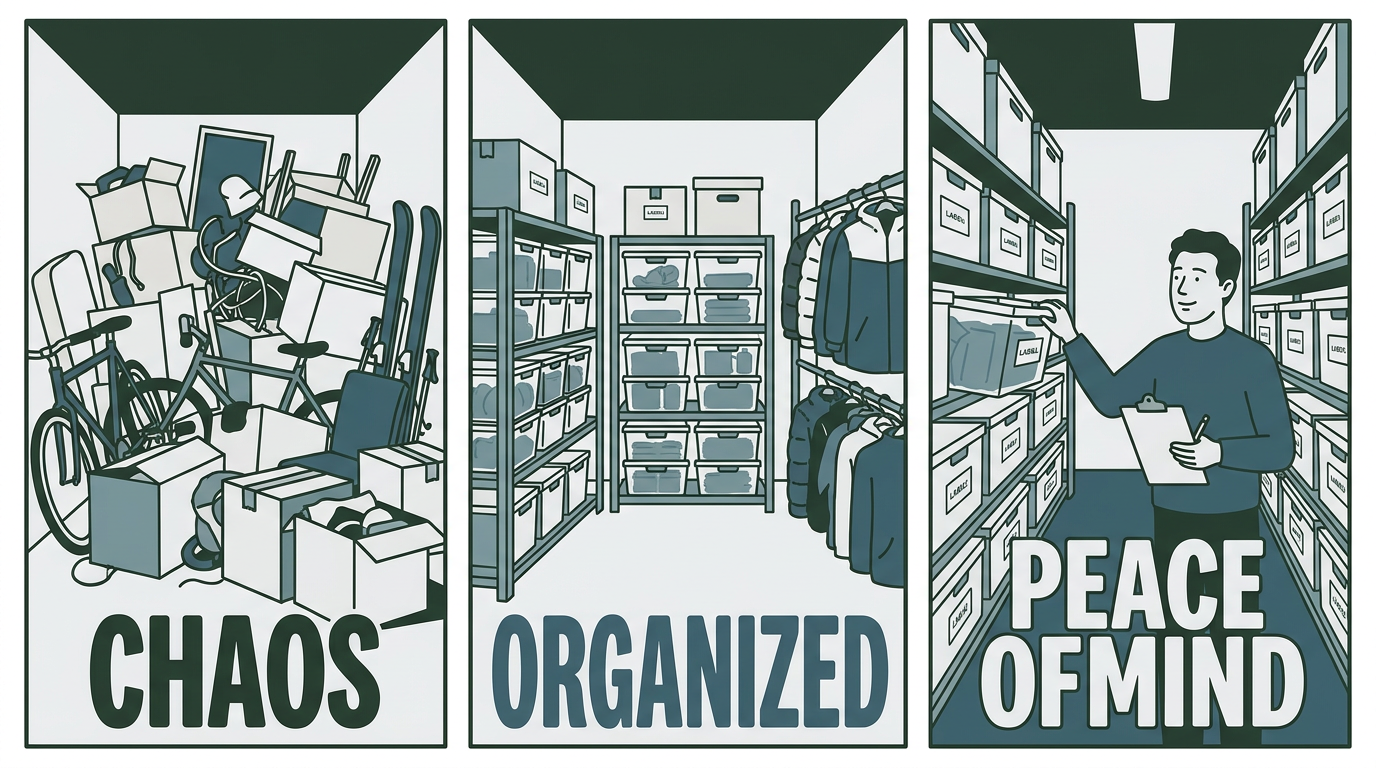
Why Storage Unit Organization Matters More Than You Think
If you’re renting a storage unit, chances are it started with good intentions—a temporary solution during a move, a place to keep seasonal items, or a way to declutter your home. But over time, many storage units become chaotic catch-alls where finding anything feels impossible. For homeowners in Park City, Utah, where space comes at a premium and life moves quickly, a disorganized storage unit isn’t just inconvenient—it’s costing you time, money, and peace of mind.
Organized to Live Well understands that your storage unit should work for you, not against you. Whether you’re storing family heirlooms, seasonal gear, or items between life transitions, implementing smart storage unit organization practices transforms a cluttered space into a functional extension of your home.
The Hidden Costs of a Disorganized Storage Unit
Before diving into best practices, it’s worth understanding what you’re losing with a chaotic storage unit:
- Wasted money: You might be paying for a larger unit than necessary simply because items aren’t efficiently arranged
- Lost time: Searching through boxes and piles adds hours of frustration to simple tasks
- Damaged belongings: Poor organization leads to items getting crushed, forgotten, or exposed to moisture and pests
- Mental clutter: Knowing you have a messy storage unit creates background stress, even when you’re not actively thinking about it
Start With a Complete Inventory
The foundation of effective storage unit organization begins before you even step into the unit. Create a detailed inventory of everything you’re storing. This doesn’t need to be complicated—a simple spreadsheet or notebook works perfectly.
For each item or box, note:
- Contents description
- Condition
- Last time used
- Reason for storing
- Estimated value
This inventory serves two purposes: it helps you decide what truly deserves storage space, and it becomes your roadmap for organizing and locating items later.
Apply the “Use It or Lose It” Philosophy
As you review your inventory, ask yourself honest questions about each item. When did you last use it? Will you realistically need it in the next year? Does it hold genuine sentimental value, or are you keeping it out of guilt?
Items that haven’t been touched in years and serve no clear future purpose are prime candidates for donation, sale, or disposal. Remember: less is more. Every item you remove creates breathing room and makes the remaining belongings easier to access and maintain.
Essential Storage Unit Organization Supplies
Investing in proper supplies upfront saves headaches down the road. Here’s what makes the biggest difference:
Clear plastic bins: Unlike cardboard boxes, these protect against moisture, let you see contents at a glance, and stack securely. Choose uniform sizes when possible for easier stacking.
Sturdy shelving units: Metal shelving maximizes vertical space and keeps items off the floor, protecting them from potential water damage.
Labels and markers: Label every container on multiple sides with detailed contents and the room they came from.
Furniture covers: Protect upholstered items and mattresses from dust and moisture.
Pallets or platforms: Elevate items off the floor to improve air circulation and protect against unexpected moisture.
Strategic Layout: Creating Zones in Your Storage Unit
Think of your storage unit as a mini-warehouse with designated zones. This approach makes retrieval infinitely easier.
Create an Access Aisle
Leave a clear pathway down the center or along one side of your unit. This aisle lets you reach items in the back without dismantling your entire setup.
Place Frequently Accessed Items Near the Front
Seasonal decorations you’ll need in a few months? Keep them accessible. Items you won’t touch for years? Those can go toward the back.
Group by Category
Store similar items together: holiday decorations in one zone, sports equipment in another, household items in a third. This logical grouping mirrors how you think about your belongings, making retrieval intuitive.
Stack Strategically
Heavy, sturdy items form the base. Lighter, more fragile items go on top. Never stack so high that the tower becomes unstable or items become unreachable.
Storage Unit Organization Tips for Park City Residents
Living in a mountain community comes with unique storage considerations. Park City’s climate and lifestyle mean you’re likely storing:
Seasonal sports equipment: Skis, snowboards, bikes, and camping gear rotate throughout the year. Store off-season equipment toward the back, and swap positions as seasons change.
Winter and summer wardrobes: Use vacuum-sealed bags to compress bulky winter clothing and bedding during warmer months.
Outdoor furniture: Clean and cover patio furniture thoroughly before storage to prevent mildew and deterioration.
Protecting Your Belongings Long-Term
Organization isn’t just about arrangement—it’s about preservation.
Climate considerations: If you’re storing temperature-sensitive items like electronics, photographs, or wooden furniture, consider a climate-controlled unit. Park City’s temperature swings can damage vulnerable items.
Pest prevention: Never store food items, even sealed ones. Use pest deterrents like cedar blocks or lavender sachets in fabric storage.
Moisture control: Silica gel packets or moisture absorbers in bins prevent mold and mildew, especially important for clothing and paper items.
Furniture care: Disassemble large furniture when possible to save space. Wrap legs and corners in bubble wrap to prevent scratches.
Maintain Your System With Regular Check-Ins
Storage unit organization isn’t a one-time project. Schedule brief visits every 3-6 months to:
- Verify everything remains in good condition
- Update your inventory as you add or remove items
- Adjust your layout based on changing access needs
- Address any moisture, pest, or damage issues immediately
These check-ins take minimal time but prevent small problems from becoming major headaches.
When to Call in Professional Help
Sometimes the task feels too overwhelming to tackle alone. If you’re dealing with a storage unit packed from a major life transition—a move, divorce, or loss of a loved one—the emotional weight can make organization feel impossible.
Professional organizers bring objectivity, systems, and efficiency to the process. They help you make decisions without judgment, implement proven organizational strategies, and complete in hours what might take you weeks. If you’re preparing to downsize, move, or simply reclaim control of your storage space, professional home organization services provide the structure and support that transforms chaos into calm.
Take the First Step Toward Storage Unit Clarity
Your storage unit should serve your life, not complicate it. By implementing these storage unit organization best practices, you create a system that’s functional, predictable, and logical—one where you can find what you need when you need it, without stress or wasted time.
You don’t have to face this project alone. If the thought of organizing your storage unit feels overwhelming, or if you simply want it done efficiently and correctly the first time, reach out for support. Organized to Live Well specializes in helping Park City area residents create organized spaces that bring peace of mind.
Ready to transform your storage unit from chaotic to calm? Schedule your consultation today and take the first step toward a more organized, stress-free life.
Frequently Asked Questions
How long does it typically take to organize a storage unit?
The time required depends on the unit’s size and current condition. A small 5×5 unit might take 2-4 hours, while a large 10×20 unit packed floor-to-ceiling could require 8-12 hours or more. Working with a professional organizer typically cuts this time significantly, as they bring efficient systems and decision-making frameworks that keep the process moving.
Should I rent a climate-controlled storage unit?
Climate control is worth the extra cost if you’re storing items sensitive to temperature and humidity fluctuations—including electronics, photographs, important documents, wooden furniture, musical instruments, or clothing. In Park City’s variable climate, these items can warp, crack, or develop mold in standard units. For purely utilitarian items like tools or outdoor equipment, a standard unit usually suffices.
What’s the best way to label storage boxes for easy retrieval?
Label each box on at least two sides (preferably three) using large, clear writing. Include both the general category and specific contents—for example, “Kitchen – Baking Dishes & Mixing Bowls” rather than just “Kitchen.” Number each box and maintain a master list that details every box’s complete contents. Take photos of box contents before sealing them, then attach or reference those photos on your inventory list for visual confirmation.